
Taiwan Aeon Corporation – Programs in Taiwan
Taiwan Aeon Corporation offers two main categories of educational programs in Taiwan, designed to inspire future talents through exploration and hands-on experience.
I. Career Exploration Programs
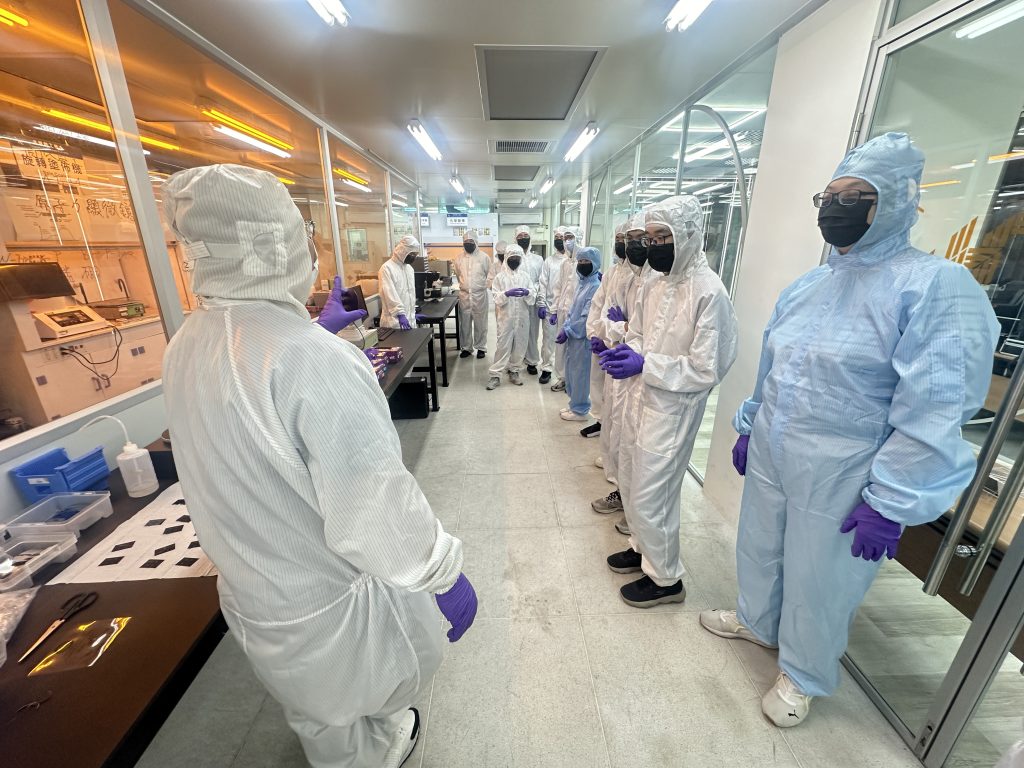
1. Semiconductor Program
This program guides students through the fundamentals of semiconductors, materials science, electronic components, and manufacturing technology. Students will explore trends in the semiconductor industry, including Integrated Circuit (IC) fabrication, Lithography, wafer packaging and testing. Through LEGO process simulation, students will experience the semiconductor manufacturing process firsthand.
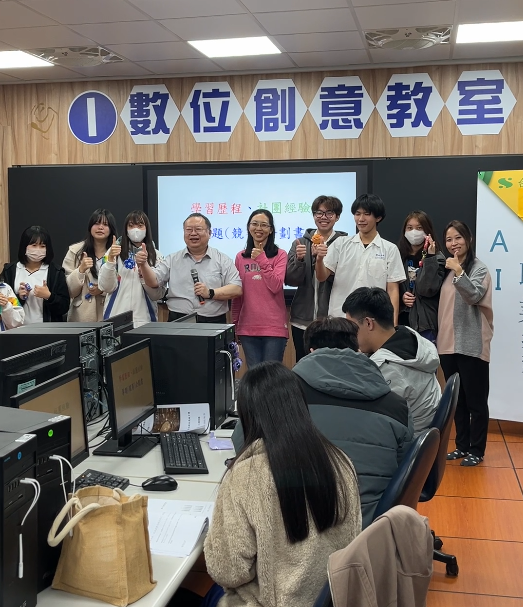
2. Artificial Intelligence Program
This course helps students understand the core concepts of AI and its technical applications. Through hands-on practice with AI tools and analysis of industry case studies, students will explore how AI improves work efficiency and creates value.
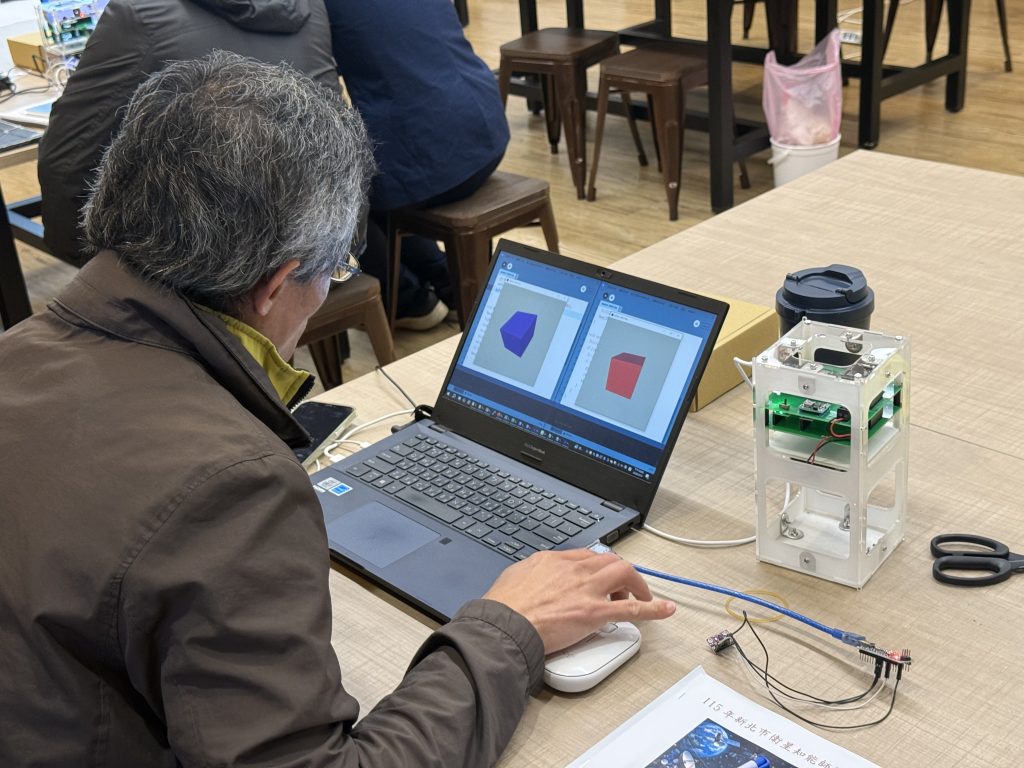
3. Aerospace Program
Starting from aerodynamics and flight control, students will learn how aircraft generate lift and how rockets work. The course covers why rockets can leave Earth while airplanes cannot, and introduces how satellites like GPS, space telescopes, and communication satellites affect our daily lives. Students will design and launch water rockets, simulate trajectories, and visit aerospace institutions.
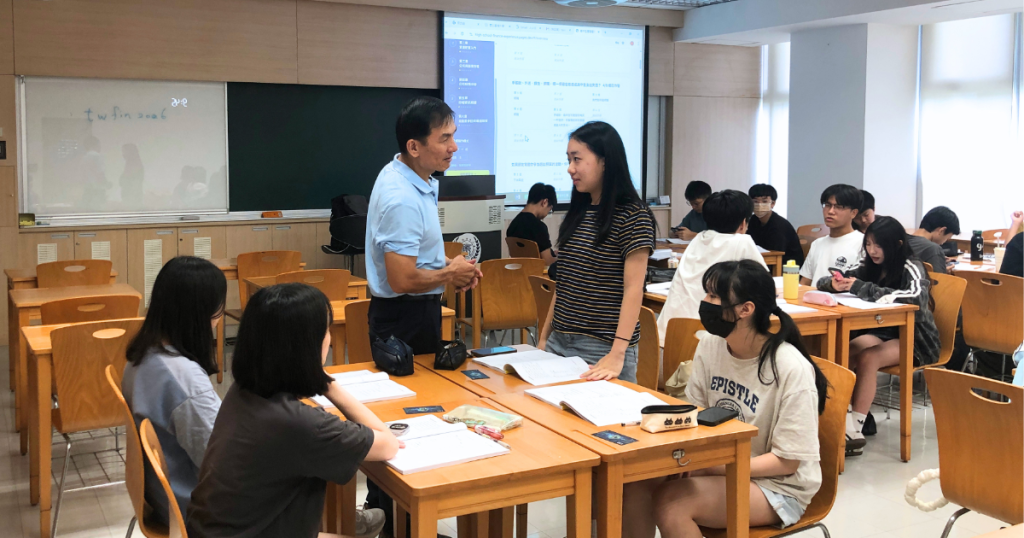
4. Finance & Investment Program
Starting from daily bookkeeping and budgeting, this program extends to asset allocation concepts such as stocks, ETFs, and funds, as well as how companies operate and the logic of the stock market. Students will learn to read financial statements, analyze business fundamentals, interpret market information, and connect financial knowledge to the real world through corporate visits.
II. Science Inquiry Camp
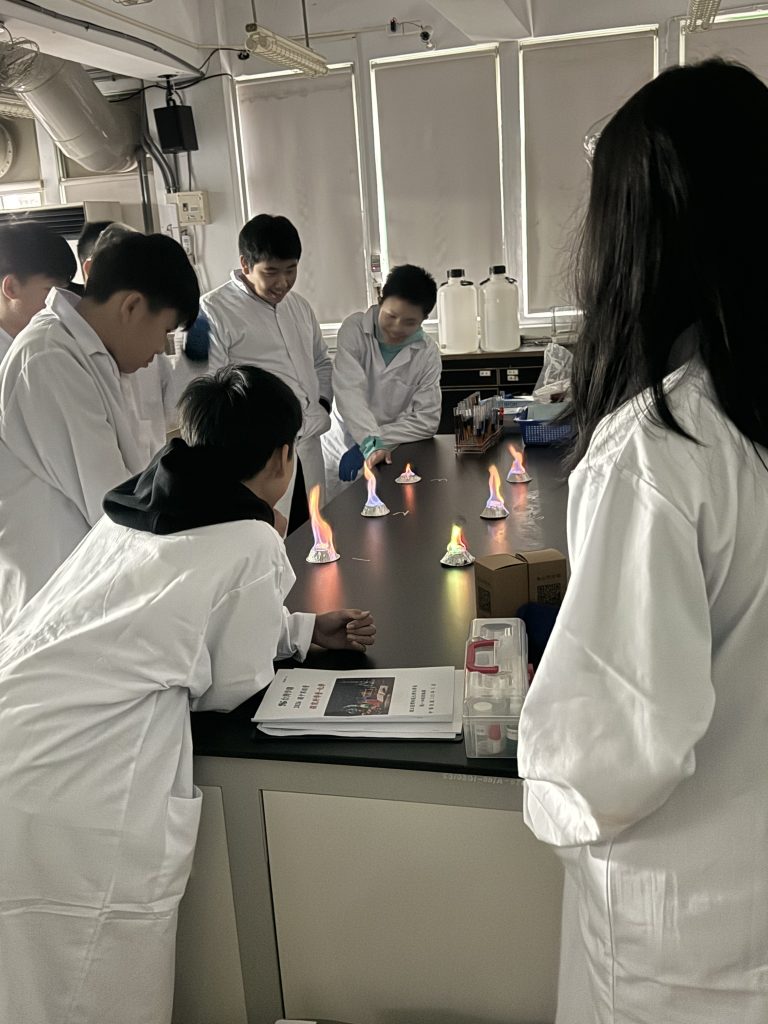
1. Chemistry
a. Covers basic and advanced chemistry lab skills, including reaction rate measurement and inorganic salt identification.
b. Learn quantitative analysis, such as measuring iron in wine and metal ratios in alloys.
c. Hands-on lab experience to understand the research process and lab safety.
d. Introduction to domestic and international science competitions.
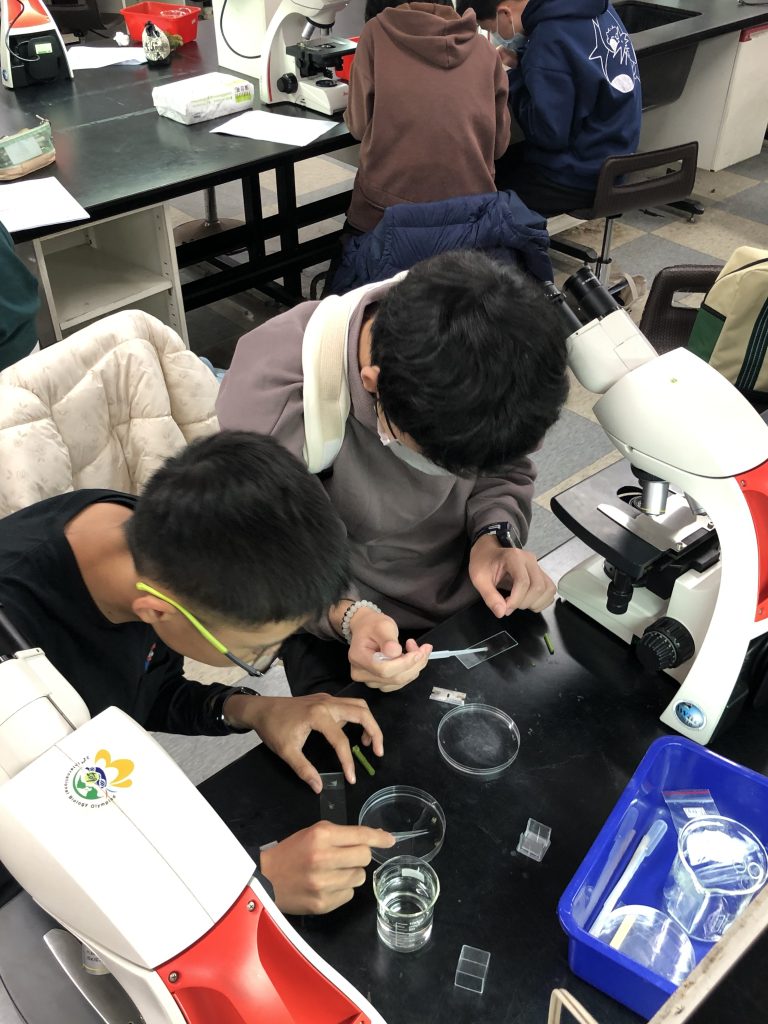
2. Biology
a. Observe Haversian systems through bone slide preparation.
b. Learn oral mucosa cell sectioning, staining, and microscopy.
c. Practice spinal cord neuron sectioning to understand neuron structure.
d. Dissect clams and isolate crystalline style to learn tissue and organ functions.
e. Conduct enzyme activity tests to observe starch decomposition.
f. Experience basic biology lab skills: sectioning, mounting, staining, and dissection.
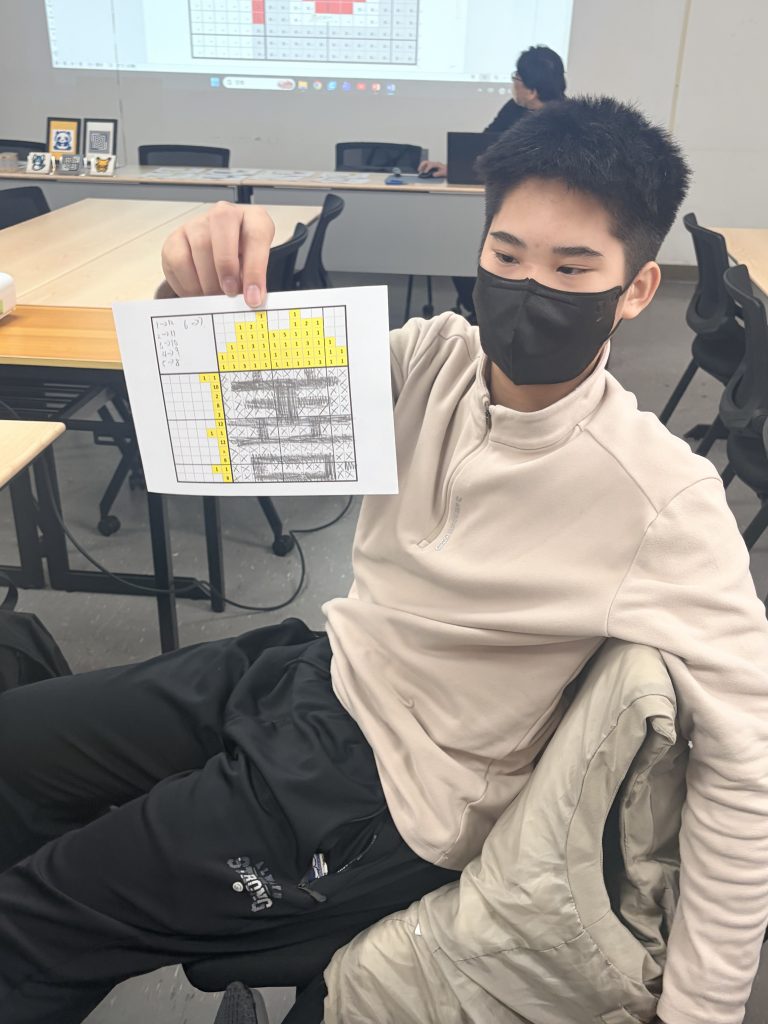
3. Mathematics
a. Learn operations of integers, fractions, decimals, and algebraic expressions.
b. Introduction to counting principles, permutations, and combinations.
c. Learn probability calculation and basic formulas.
d. Explore properties of 3D shapes, including area, volume, and spatial relationships.
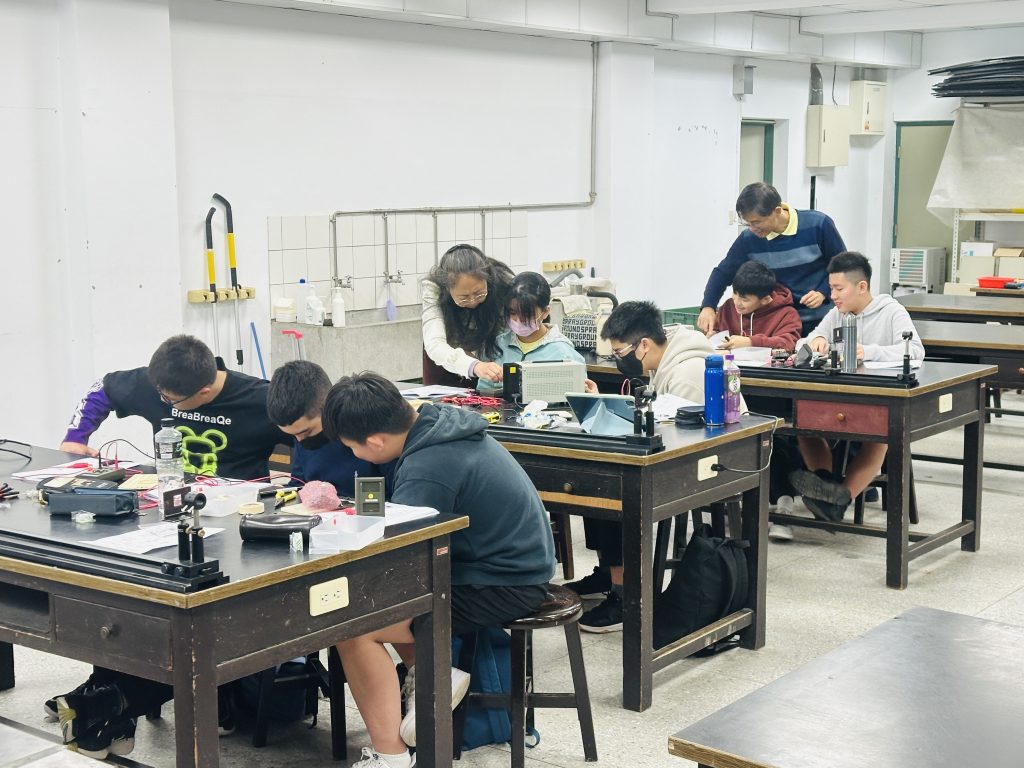
4. Physics
a. Understand traveling waves, wavelength, and amplitude.
b. Experience beat frequency and sound wave interference.
c. Polarizer experiments to learn light polarization.
d. Circuit operations: series/parallel, voltage, and current.
e. Laser experiments: diffraction and interference.
f. Develop observation and scientific inquiry skills.
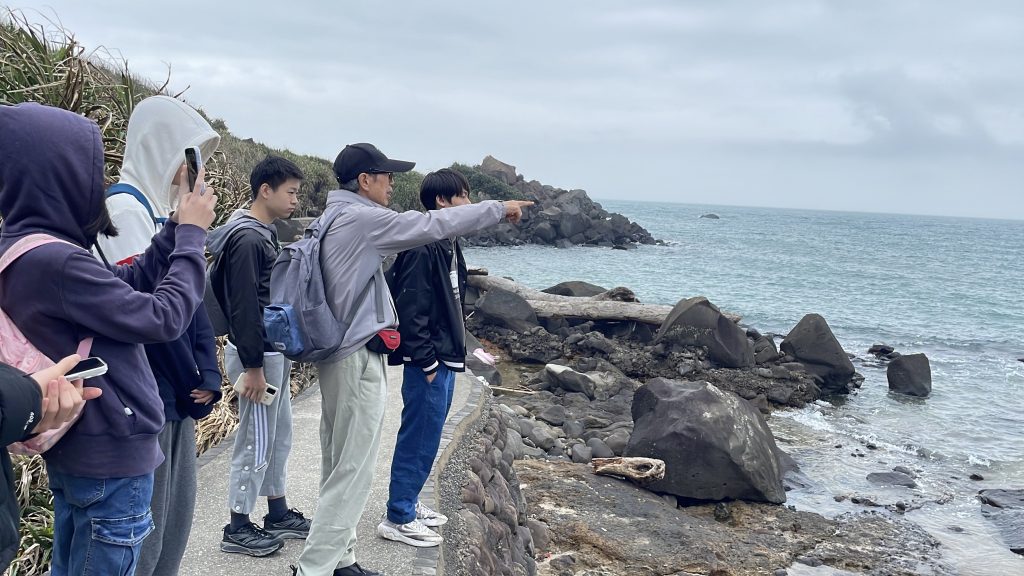
5. Earth Science
a. Learn crust structure and plate tectonics to understand earthquakes and volcanoes.
b. Explore Taiwan’s diverse coastal landforms.
c. Learn weather observation methods and climate systems.
d. Explore the structure of the universe and the solar system.
e. Field trips to Taoyuan dunes, algal reefs, and river terraces for on-site learning.